
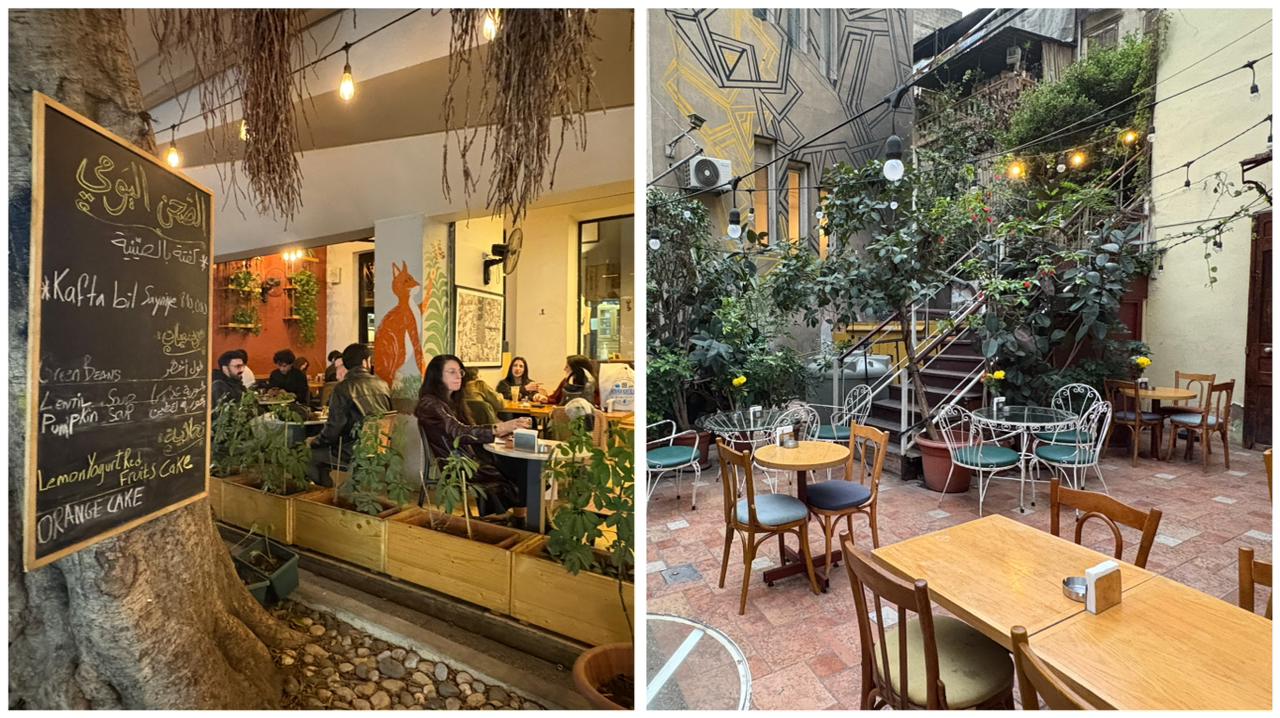
As students settle once more in the spring semester, and the temperature is at its icy peak, customers repopulate the campus’ surrounding restaurants and cafés, reigniting that cozy, wintery vibe that is so revered. That’s no different for resto/cafes like Raseef or Taht Al-Shajarah. Not too far away from each other, and not too different in style, sit two resto/cafes in Hamra, near AUB. Though there seems to be no apparent conflict between them, the two cafes have set the stage for the ideal Lebanese/Levant aesthetic, insinuating some sort of unspoken and underlying rivalry, or for dramatics, a turf war. Students are not the only customers there, of course, yet the consensus between both “parties”, if you will, have developed into two opposing opinions on Campus: Raseef or Taht Al-Shajarah?
Before tackling this foreboding question, let’s delve into the past and figure out how both restocafes started. Despite being the underdog of the two, Raseef opened first around the year 2018, starting up shop near AUBMC, automatically attracting AUB students, and becoming a hub for them; the go-to when you want to pick yourself up with a coffee after a long day of classes, or unwind with a group of friends. This era of Raseef was definitely a humbler version of what it is today, and, according to a local customer, it retained mostly the same menu it has today—even commenting that the food is still as “mid” as it was back then. Regardless of whether their culinary prowess is their strong suit or not, Raseef maintained a comfortable and appealing environment, especially for students, even after the big move after COVID-19. With such a wider expansion, it’s a wonder how the place nailed the aesthetic once more without losing its integral cultural and quaint attributes that drew customers in in the first place. Not only is the atmosphere recaptured, but they’ve also been managing with the same crew, fostering a familiar environment with their patrons–ever expanding with their welcoming of animals, especially stray cats, pleasantries with all kinds of customers, and humble attitudes that ripple throughout.
Then about around 2019, with COVID-19 around the corner, a new café opened on Jean Darc street, a peculiar yet humble start of Taht Al-Shajarah, which was then called “Triple C”. It was somewhat of a ghost of what it is today; only serving coffee, little to no furniture, with about 4 tables—5 at most. Yet, despite these shortcomings, Triple C persisted. And not only that, but it also evolved. Suddenly, it began to expand, adding cultural aesthetics and furniture, painting over that once barren, sullen café with extravagant, maybe a little too familiar, furnishings that were hard to ignore, and as the cherry on top, playing that radiant voice so deft and pleasant to morning ears—Fairuz, of course. Granted, Raseef does play Fairuz, yet, its hidden location doesn’t turn heads, luring them into the safety of her voice. Taht Al-Shajarah’s placement was a great advantage for their now bombarding popularity, drawing in customers of a higher status, and branding the place as a high-end resto-café, that of great stature. Like the Oreo to Hydrox, (the not-so-famous yet original cookies and cream biscuit), Taht Al-Shajarah claimed its position as the go-to after-class café, toppling Raseef’s place, and, in its stead, garnered a more popular standing.
Yet, this new ranking has left a boastful touch to the place, which didn’t go unnoticed by its customers. Contrasting Raseef’s warm embrace, Taht Al-Shajarah seemed to realize a superficial approach to prosperity, cycling in a new crew at every turn, disregarding the homely appeal of familiar faces, favoriting well-off, foreign, popular customers over the common Beiruti locals, and overall disrupting the peaceful stage it tried so hard to set. This standard then mostly appeals to a certain type of customer that they would like to maintain; a high-class, socially performative, and image-driven persona.
This harshly set rival for Raseef made it difficult to maintain its relevance, competing now by introducing higher set prices on par with Taht Al-Shajarah’s own, almost, in a way, gentrifying the artistic culture and capture of Beirut it seized, and was the first to—yet at the end of the finish line, a new player cut in, and set the scene for what resto-cafes would be known as in the Hamra area.
To expand on the gentrifying nature of Taht Al-Shajarah, it’s takeaway coffee subsection on the side encourages a grab and go situation, exemplifying an out-of-touch with reality feeling that neglects one of the core principles of a cafe, its experience. Having an outdoor bar on the side feels like a retreat from a traditional coffee drinking experience, which is ironic given the resto-cafe’s obsession with the classical Lebanese style of cafe.
In the end, regardless of the quality of the food, drinks, or atmosphere, Taht Al-Shajarah reigns as the automatic and immediate choice for a Lebanese style resto-cafe experience, the victor of the turf war, hailed by both locals, students, and celebrities alike, with Raseef sitting as the second contender, the underdog, the hidden gem.
Edited by Amin Kharrat and Judie Chakass