
What seems to be the greatest problem facing criminal justice systems throughout history is their staggering reliance on human work. Why? Because humanity is undoubtedly flawed. Naturally born sinners, humans possess an inherent penchant to breach moral laws and ethics. Despite all that, one entity views itself immune to human error: science. Exempted from fallacy, forensics and drug testing ought to be impartial. Yet, carried out by humans themselves, scientific testing is just as prone to leading justice down the wrong path as anything else, to say the least.
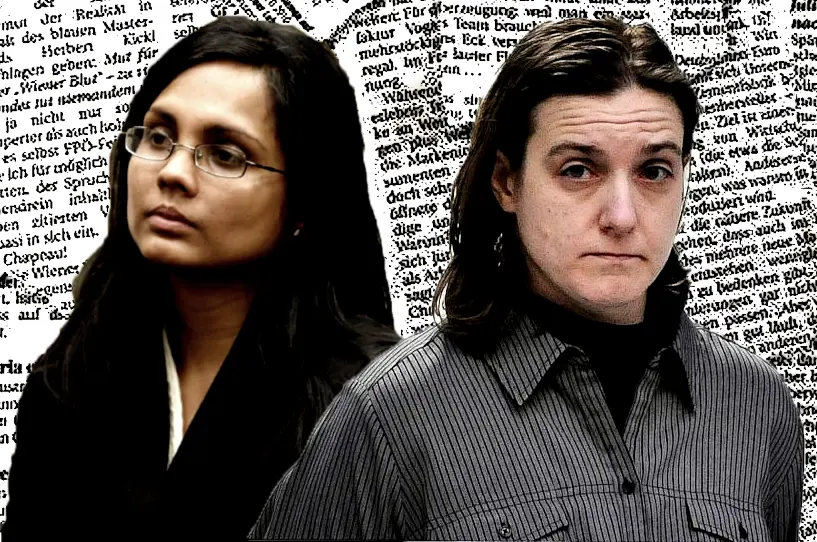
Netflix original docuseries How to Fix a Drug Scandal showcases a true story of the misconduct of two drug labs in Massachusetts. Sonja Farak, born 1978, worked as a chemist at the Massachusetts drug lab in Amherst. She allegedly tampered with evidence over the course of many years, resulting in liability for wrongful convictions. As scandalous as it can be, Farak is only one half of the story. Another chemist working at the Hinton State Laboratory in Boston, Annie Dookhan, was committing equally egregious behavior. Dookhan forged colleagues’ initials, falsified analysis reports to police and the court, and tampered with evidence as well. Together, the chemists’ misconduct dismissed at least 40,000 drug cases, stealing the spotlight for their roles in one of the United States’ “most consequential law enforcement scandals.” According to Attorney General Martha Coakley, the Dookhan case “totally turned the system on its head” and Farak’s misconduct is said to “have shaken the very foundation of the [US] criminal justice system.”
Throughout the early 2000s, Dookhan was regarded as the “superwoman” of Hinton, testing approximately four times the average chemist and nearly double the second-most prolific lab partner behind her. Despite her worrying speed, the tables didn’t turn on her until she falsely testified in court that she had a master’s degree in Chemistry in 2009. With increasing suspicion on the Trinidadian-born first generation American, Dookhan committed another mistake two years later when she was caught with an act of forgery. After thorough investigation with the police, it turns out there was a reason she was so fast: “she wasn’t actually testing all of [the samples].” Aside from sample mixing and forging colleague initials, Dookhan would enhance her efficiency through “dry-labbing”, a process of identifying narcotics as what they were suspected to be. For instance, if white powder looked like cocaine to the police, she would simply approve of it as cocaine. She would even contaminate a returned sample that must be retested to match her erroneous results. The question that bewilders the public is why she committed these deeds.
According to specialists, growing up as a minority in America encompassed her childhood with isolation and no sense of belonging. Annie’s behavior was a way of showing society that she was an accomplished person. After a decade since her recruitment in 2004, she pleaded guilty to twenty-seven counts and was finally sentenced to three years in prison.
While Dookhan fabricated drug data in Boston, Farak was consuming it in Western Mass. Left at her leisure under minimal supervision by staff, Farak first resorted to liquid methamphetamine which she claims, “heightened her senses and increased her working ability.” Alas, her daily routines shortly shifted into a self-destructive addiction when she began smoking crack up to 12 times per day using laboratory glassware under the fume hood. Not only would she ingest narcotics from standard solution bottles, but also cooked more drugs whenever the desired effects were not yet attained. To cover her tracks, she would add ersatz powder to some sample bags or pour oil into the flasks whose levels have decreased noticeably. Her aforementioned practices were hidden in the dark until 2013, when her coworkers noticed missing samples from Sonja Farak’s workplace and paid attention to her mounting absences during lab-time. Farak felt “alien and unseen, a ghost floating through her own life,” which led her to turn to drugs that were tremendously effortless to procure. Aroused by her frequent visits to the bathroom and prolonged breaks, the culmination of these suspicions ended Farak’s eight-year drug fest. In 2014, she was arrested and sentenced to 18 months with probation under two counts of evidence tampering and possession of illegal substances.
The Massachusetts drug scandal doesn’t end here.
The crux of this story is that criminal prosecutions have been jeopardized by the chemists’ wrongdoings. With Farak high at work and Dookhan tainting an unbelievable amount of evidence in Jamaica Plains, the uprightness of prosecutions in which the drug evidence was handled by either of them is entirely placed in question. How legitimate can they possibly be? This is when the hammer comes down on the Massachusetts Attorney General’s office (AGO). With local and state police passing most seized illicit substances into the University of Amherst Drug Laboratory and what accompanies it from a burden on the AGO’s shoulders, it is no surprise that Attorney General Martha Coakley attempts to evade responsibility. In a press conference post-incident, Coakley confidently implied that the repercussions of the Farak case is not as “widespread [as] those stemming from the Jamaica Plains incident.” She believes Farak’s drug use did not implicate the reliability of drug results as much as dry-labbing and falsification of tests affected the Boston lawsuit. However, defense attorneys did not turn a blind eye to a hoax like this, but rather expended all efforts to reach exculpatory evidence that has been deceptively withheld by members of the AGO.
Lawyer Luke Ryan of Northampton, Mass. aggressively sought to remove the cloud that has been cast over the credibility of Farak’s work. After difficulties obtaining the evidence, Ryan finally cracked the case. He found interview notes from therapists, psychiatric reports, and ServiceNet diary cards seized from Farak’s car. “I tried to resist using @ work, but ended up failing,” writes Farak; hence the contradiction between the officials’ determination to Farak’s drug testing integrity and what truly happened behind the scenes. Since then, until 2019, the Supreme Judicial Court has dismissed more than 24,000 cases related to Farak and 22,000 wrongful drug convictions that have been blemished by Dookhan. In addition, sanctions on the AGO required the office to inform the victims of their right to contact defendants and spend a total of $64,505 in advertisements pertaining to the dismissals.
Delving into the sinister story of Annie Dookhan and Sonja Farak sheds light on how often criminal judicial systems risk getting lost beneath the avalanche of administrative oversight and manipulation of power. In spite of the AGO’s propensity to cover up the truth, the office should realize that it brought the problem to itself. The question remains the same: why didn’t the office regularly administer drug tests on these chemists, who could easily send the Massachusetts’ legal system into a tailspin? Today, with many innocent people around the globe standing behind bars for crimes they have not committed, it is our duty to bring life to those whose voices are unheard.
Edited by Lynn el Masri