

Student movements have long been a strong force in Lebanon. We owe the establishment of the Lebanese University to the students who mobilized on January 23, 1951. Their general strike demanded the establishment of a public national university that was accessible to students of all classes across the country. Access to higher education at the time was restricted to a few private universities, such as AUB and USJ. The protests included students from the working and middle classes, accompanied by professors and doctors from other private universities.
Farjallah Honein, the first president of the student sector in the Lebanese Communist Party, was martyred as a direct result of these riots. He was murdered by Lebanese security forces while at the frontlines of the protests. Just three days after his death, the decision to found the Lebanese University was announced by the Council of Ministers. The Lebanese University would later become an institution mainly educating working class students, and an active ground for the development of student politics in the country.
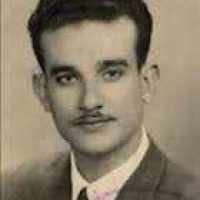
Farjallah Honein, first president of the student sector in the Lebanese Communist Party
Since then, the student political scene has been a long-standing mirror to, and active participant in, local, national, and regional affairs. Student organizing has been a force of change not only at the level of university administrations, but also at a more national scale, constantly challenging the status quo and order imposed upon them. Placing themselves at the nexus of higher education and policy making, student bodies across Lebanon are the overlooked and exploited players of the political arena.
Student organizing at AUB particularly has a long and illustrious history. The first student protest in the Arab world took place on AUB’s campus during the 1882 Darwin Controversy. Protesting students were in favor of teaching Darwin’s Theory of Evolution, which was opposed by the administration of that time. AUB then was the ground of multiple student-led political groups that reverberated nationalist, socialist, and pan-Arabist ideologies, such as Al Urwa al Wuthqa and Harakat al-Qawmiyoun al-Arab. In fact, in 1952, Outlook’s editors even took on a satirical spin to describe the highly politicized nature of campus for their April Fool’s issue, posting the following notice:
“There will be a demonstration this afternoon at 3 in front of the Medical Gate to object against everything[.] All those interested please report there promptly five miuutes [sic] before time. The demonstration promises to be very exciting – tear gas will be used, and the slogans are simply delightful. If all goes well, police interference is expected. If not to join, come and watch.”
A Brief Timeline of Political Activity on Campus
AUB grounds have witnessed a series of protests and political actions since the end of the second world war. These focused on both the university’s administrations, and the larger issues of the day, such as the continued struggle for Palestinian liberation. The student body was generally much more politicized, and campus was a highly charged space, with students often ready to struggle and agitate for what they wanted and believed in.
In 1954, AUB students were some of the first to protest against the proposed Baghdad Pact, marching from College Hall to Medical Gate. Students clashed with the police waiting for them at the gate, with the Lebanese government refusing to give their protest a permit. Eventually, after getting dosed with water cannons, students were shot at, with one Makassed student killed, 26 others injured, and one permanently paralyzed.
In 1967, a march of over 700 students took place in front of West Hall. The march was organized and led by the Arab Student League, who condemned the United Nations’ partition of Palestine in 1947 and the subsequent catastrophe that unfolded in the 1967 war.
In 1968, following the Zionist attack on Beirut International Airport, AUB students went on a 12 day strike, which saw 50 students go on hunger strike. The strike addressed four demands to then Prime Minister Abdallah Yafi’s government. They called for, “the judging of those responsible for the Beirut Airport Incident [and] stressing the legality of the work of the Fedaiyeen in Lebanon.”
In addition to the strike, there was also work on the ground. The Medical Student Society at the time mobilized a campaign to collect funds and prepare medical kits for villagers in the South to protect themselves against potential Zionist raids.
At this point in time, as Betty Anderson recalls, the university was being described by publications such as Newsweek as “Guerilla U” due to its deep ties with the rising Palestinian liberation movement. The article described how “most of the recruiting for rebel organizations takes place at a student hangout called Feisal’s Restaurant, which faces AUB’s main gate. There, students and former students sit around arguing politics endlessly over cup after cup of Turkish coffee.”
A few years before this, during her stint at AUB in 1962-63, Palestinian revolutionary Leila Khaled would describe the scene in bleaker terms, noting that “AUB was an intellectual graveyard for me.” She found that the university was a “‘finishing’ school for the rich children of the Middle East and a social club for the colonial elite of the Arab world.”
But at the same time, she had managed to organize as part of a secret underground Arab Nationalist Movement (which itself was founded by AUB graduate Dr. George Habash) cell on campus. As part of this, she would spread literature and posters about the organization and its beliefs in and around the women’s dorms at Jewett Hall. She was once caught by a campus security officer, but he turned out to be sympathetic to her cause. When the AUB administration found out, things were, as usual, a bit more testy, with Khaled threatened with expulsion and ordered to immediately cease her political agitation.
Students have never taken kindly to successive AUB administrations’ calls for apolitical calm, especially when the anger was about those administrations’ own decisions. The year of 1971 saw a 28-day sit-in strike following a decision by the administration to approve a 10% hike in students’ tuition fees. The Student Council at the time called for an open strike of AUB classes, with student council leader Maher Masri comparing the plight of AUB’s students to the struggle of Ho Chi Min and North Vietnam against American imperialism.

The Daily Star reports on the 10% strike
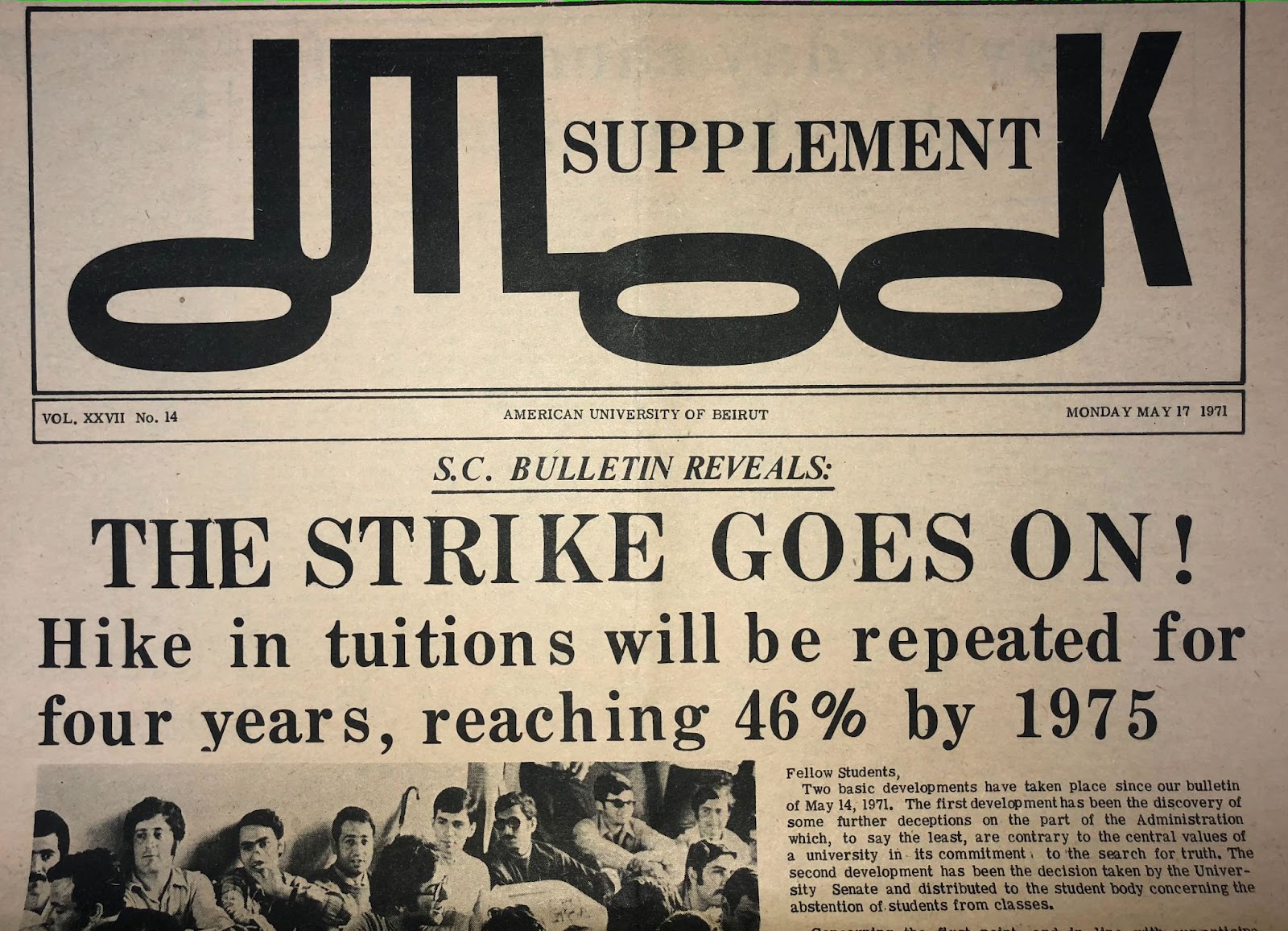
AUB’s newspaper Outlook headlining the strike
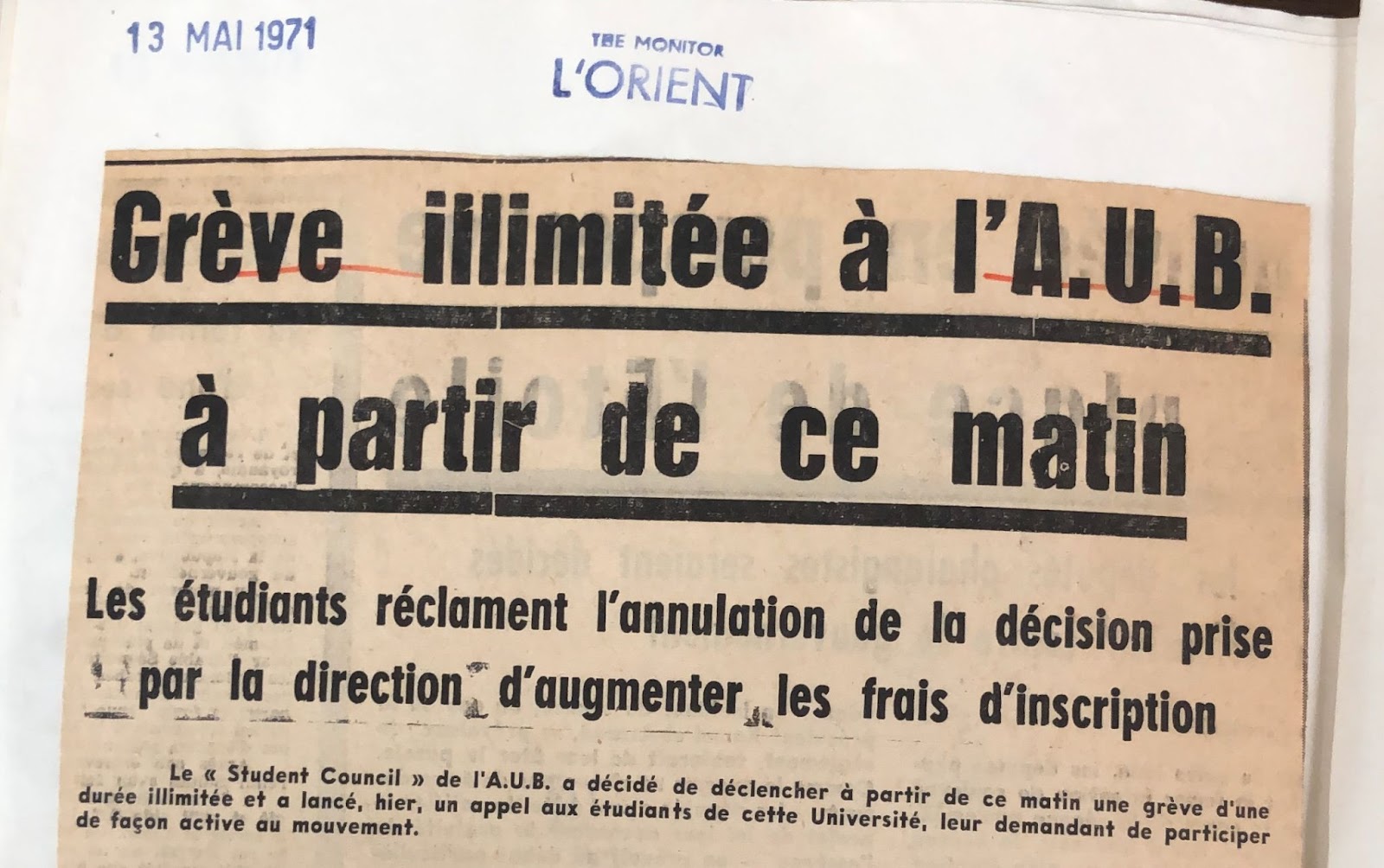
L’Orient reports on the open-ended strike
Naturally, security was tightened in the next few days. Policemen surrounded AUB’s walls as they set camp for a whole day, while only AUB personnel such as students, faculty, and non-academic staff were allowed on campus as others were denied. Everyone from the student body participated in the strike, including medical students from all four years.
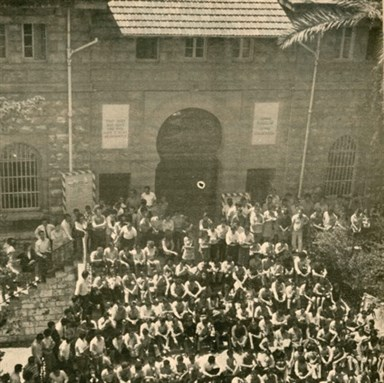
Image from May 25th 1971 issue of Outlook. Retrieved from: https://www.jadaliyya.com/Details/23777
Classes were disrupted for days, protesting students launched attacks using fire extinguishers, while the University’s security forces unleashed their repressive fury upon the protests. Workers and students alike were injured, silent marches with over 200 students were organized, and at some point, two bomb scares were received by the university. The air was charged with uncertainty and students were fighting for their voices to be heard.
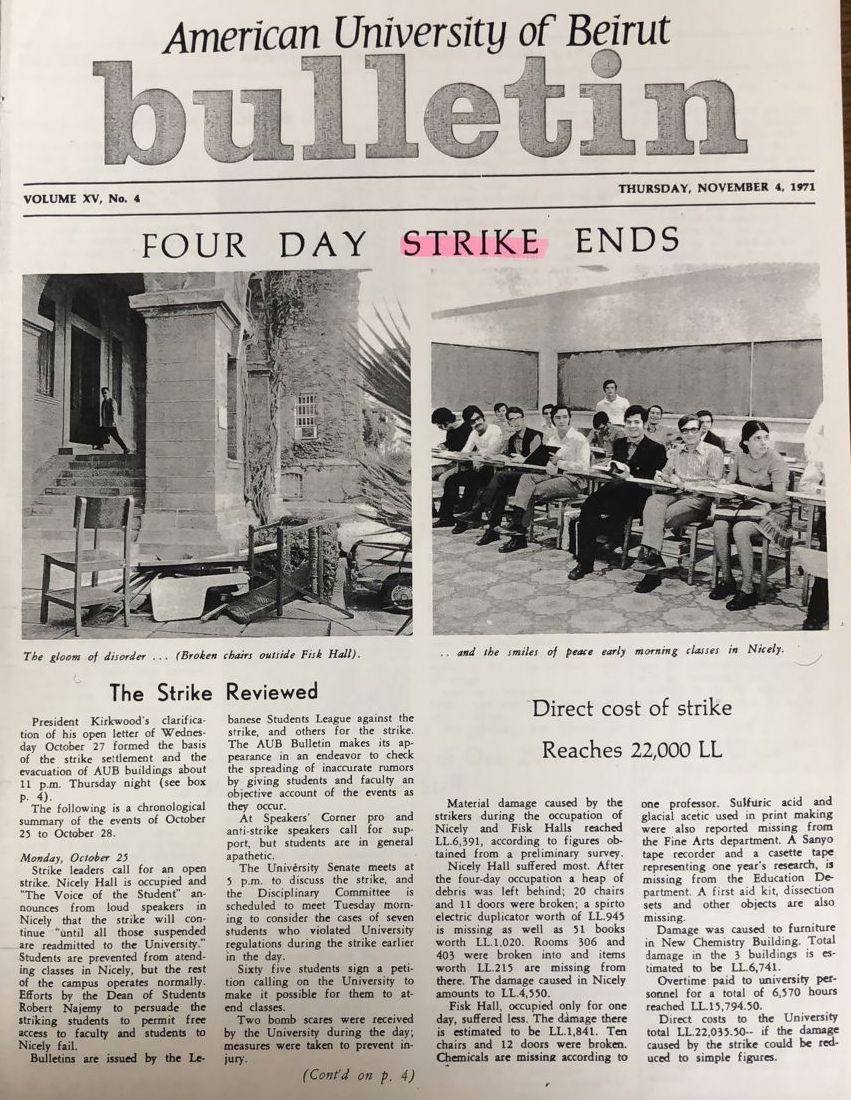
AUB’s Bulletin cover page, November 4, 1971
The 1975 Civil War and subsequent expulsion of the PLO and Palestinian organizations in 1982 ended this round of struggle. In the war years, a more sectarian approach to student political organizations blossomed, with campus blocs reflecting the parties and militias at war.
The late 1960s through the 1970s ushered in milestones in student political history. Arab nationalist and pro-Palestinian sentiments mobilized across classes and the political scene was inundated with deeply ideological factions and students. This was an unparalleled moment in the history of Lebanon’s student struggle, one which almost every movement tries to claim or hark back to.
Post-civil war, the student body primarily became a vessel for the war’s victors to reproduce and propagate their power.. Although student activism was not completely eliminated, the campus that was once a force of social change was relegated to a passive and secondary role that mostly reflected the emerging post-war order.
Decay, Dollarization, and Democracy
After the end of the war, AUB brought back student representation in a smaller capacity. The Student Council was not allowed to return, instead making way for the less-powerful and more easily controlled University Student Faculty Committee (USFC). Despite a brief, but powerful, blip in the aftermath of the October 17 protests and private universities subsequent decision to peg tuition at the 3900-rate, student struggle has been largely splintered and subdued in this era.
A quick look at the USFC’s Instagram page and the USFC meeting minutes shows that the proposals that have passed are mainly limited to internship opportunities, club/society funding, availability of study areas, and other such relatively trivial matters. Meanwhile, when concerns related to tuition fees and protests were raised, they were either dismissed by the administration or vaguely addressed.
During the 2020-2021 academic year, at the height of the 3900-peg fiasco, a USFC meeting was called on December 3, 2020. When FM/HSON USFC Ali Slim raised the issue of a lack of trust between students and the administration and many other valid concerns against the tuition hike, he stated that students do not trust they will be protected upon increasing the exchange rate to 3,900LBP. He was met with blatantly dismissive comments from AUB’s administrative apparatus.

December 3, 2020 USFC Meeting Minutes
On the agenda of the next USFC meeting (January 4, 2021) was a “review of recent violent events.” The same redundant rhetorics were exchanged during this meeting by both the administration and student representatives. Everyone condemned the acts of violence while also respecting the students’ right to voice their demands so long as they are peaceful and adhere to the student code of conduct. The prominent theme of the discussion revolved around misinformation, campaigns of cyberbullying (aimed at AUB!), and property damage. Student representatives were immediately put on the defensive, and forced to individually denounce protesters before commenting on the matter at hand (which some were more than happy to do).
The same figures that the student body is revolting against keep on insisting on the need for peaceful negotiations to reach decisions that will benefit all AUB community members. The irony is that whenever valid and reasonable arguments are raised by a student representative, they are shut down immediately. Then the President comments that “we need to tackle the narrative that the administration does not include students in decision making,” within the same meeting.
This clear division between (some) student representatives and the administration can be best illustrated through the March 30, 2021 USFC meeting, where the idea of an independent student council was on the agenda. The proposed student council was to be exclusively composed of student representatives and was set to serve as a model to articulate student needs more efficiently. The council was compared to “the Faculty representation in the Senate, or the Deans’ representation in the Board of Deans.” Expectedly, the proposal was met with immediate resistance not only by faculty, but also other fellow student representatives that “did not see how the new entity is going to add value because the USFC submits proposals and implements them while voicing student concerns.”

March 30, 2021 USFC Meeting Minutes
This is the democracy that the University prides itself with; a hellish bureaucratic limbo akin to the allegory of Sisyphus.
The USFC encapsulates the shift that occurred in student political activism on campus pre and post war. Aside from the administration’s constraints, there’s also something to be said about the issues that concern the student body. The concerns have become less regional, less local, more atomic and administration-centric. This isn’t to say that the latter issues are not of importance, but rather that there has been a clear stifling of the student body’s capacity by the administration.
Since the end of the war, university culture, following national and international trends, has shifted from a Guerilla U to a Consultant U. Extracurricular life on campus has been degraded into a series of job-training and CV-friendly activities, with collective politics generally eschewed in favor of individualistic bettering.
Previously attained goals, such as the Lebanese University, are also under threat. LU students are currently protesting against an increase in their tuition, after LU’s president Bassam Badran reported that this year’s tuition for Lebanese and Palestinian students at the undergraduate level is to be 12-13 million L.L., a drastic spike from the previous 885,000 L.L. charged in 2022. LU’s students, now almost totally locked out of private universities, are continuing to pay the price of the country’s collapse and governmental neglect.
The issues here are not limited to Lebanese universities, but indicative of larger trends within the modern capitalist university. Scholarship continues to be under constant threat globally with student protests on the rise across multiple campuses including the University of Southern California (USC), West Virginia University (WVU), Manchester University, Sheffield University, and Edinburgh University. Students and workers are marching through their campuses decrying their abysmal wages, lack of racial representation, budget cuts that aim to discontinue multiple majors in conjunction with staffing cuts and an increase in tuition fees.
Paralysis
Today’s student representatives are less concerned with being drivers of change and challengers of the administration, instead often favoring collaboration and compromise with administrations, all in the name of “building trust.” The latter rhetoric has been echoed through emails, statements, and town hall meetings, almost always as a means to placate any potential political fervor. The student struggle has never been about compromising with the administration. Evidently, nothing truly fruitful has resulted from peaceful negotiations.
AUB’s student body is devoid of unity with other marginalized groups on campus, such as part-time faculty members and daily workers, let alone with other universities’ student bodies. Thus, despite the aggregate damage from the COVID pandemic, port explosion, economic crises, and general political vacuum in the country, students have been largely a passive force in national affairs too, with organizing mostly pigeonholed to social media statements, posters, boring academic talks, and low energy protests.
Even if you decide to go through the university’s selected means, AUB’s policies and its bureaucratic system handicaps its students from actualizing their demands. Every decision requires a meeting, then a vote, then a proposal, which will later on be rejected on some vague grounds that have something to do with budgeting. Meanwhile, select investors and the higher ups of the university continue profiteering off of our tuition, wasteful spending is still on the rise, and now new campuses are being built abroad while the university continues to underpay its faculty and workers.
The dollarisation of tuition, coupled with the yearly increase in the price of the credit has also led to a change in the demographic of AUB students. What is left of AUB’s working class students are being pushed out, with future admitants now facing a tough climb to pay the university’s extortionate fees. Seemingly, AUB is slowly but surely sifting through its student body, only keeping people who can afford to pay its high rates of education. With a relatively more homogeneous class of students and an increasingly individualistic sociopolitical climate, student struggle has entered into a period of prolonged paralysis.
Edited by Bachar Bzeih