
The university seems to be in a perpetual crisis. Public universities are being eviscerated at home and abroad, while private universities scream of vitality while gutting their students, workers, and campus. Faced with constant internal and external threats, universities are constantly telling us, or being told, that they need to reinvent themselves.
The current looming threat comes in the shape of artificial intelligence. Generative AI such as ChatGPT have been the subject of many think pieces, usually centred around whether to ban or embrace them in the academy. Of course, the same New York Times that is running these articles is also on the brink of legal war with OpenAI over ChatGPT’s use of copyrighted material. While the bot has also come under fire for its exploitation of the labour of countless unnamed micro, or ghost, workers.
ChatGPT’s plethora of exploitative and extractive practices make it a right cultural fit for the modern entrepreneurial university so from that perspective, it is definitely not a threat to the academy. In fact, out of all the “smart” developments parachuted on us in the last decade, it may be one of the few that actually had pre-existing demand.
Unfortunately, despite Silicon Valley bros’ best wishes, ChatGPT cannot actually fulfil the masses’ true desire for Generative AI: cheating and plagiarism. Its propensity to lie, increasing repetitiveness, and at this point pretty recognizable writing style, have made it a non-starter for serious essay writing. It also is just pretty bad overall beyond corporate-jargon and empty content-filling. Imagine what else those $700,000 a day and 700,000 litres of water could have been used on.
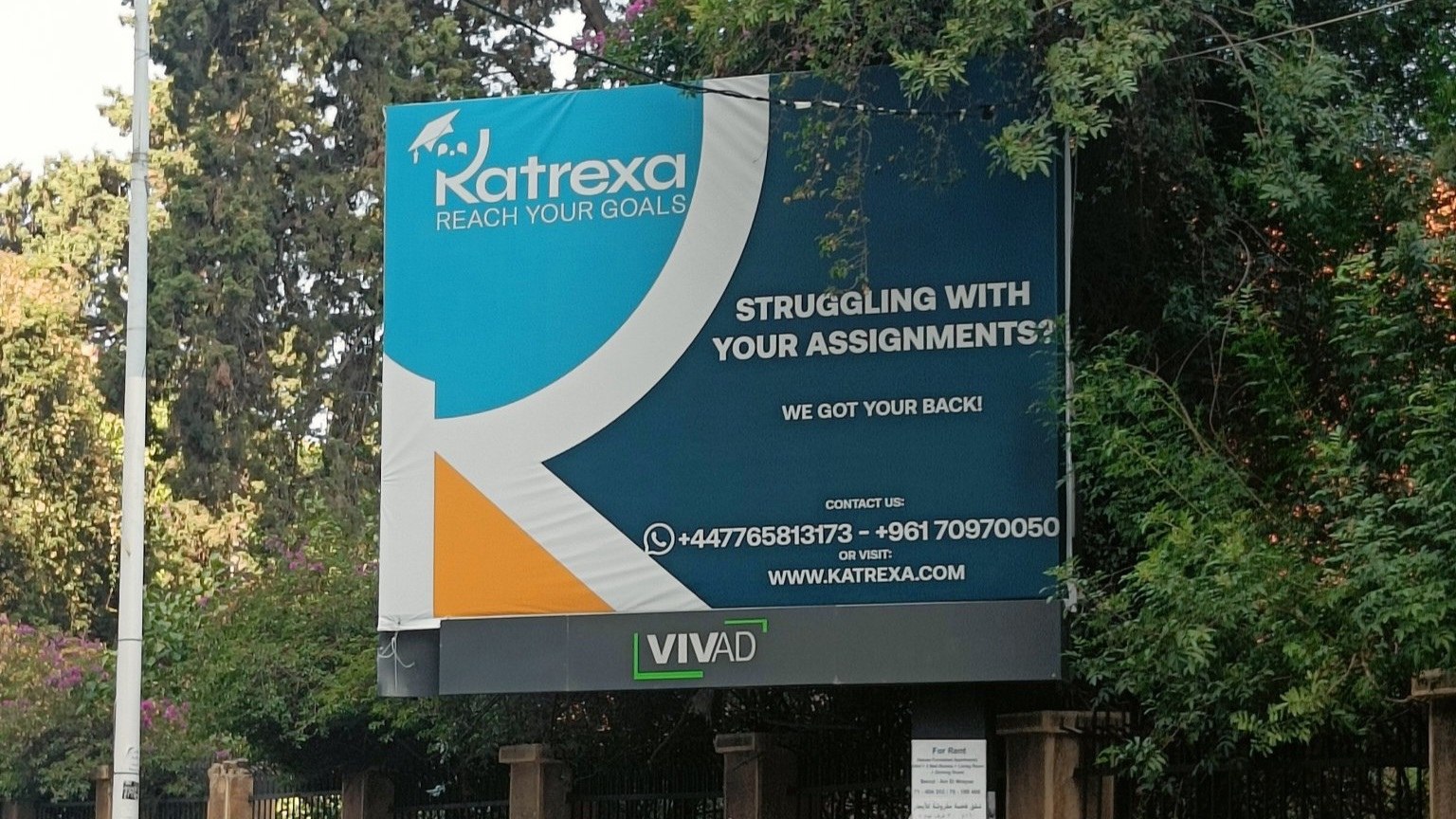
If you want to cheat, you still have to take the analog route, going through a vast and ever-shifting mass of semi-professional and professional homework doers. In Lebanon, a pretty large informal economy has developed around homework-doing, with multiple full-fledged businesses and hundreds of people involved in this market. But despite its widespread prevalence, cheating, and the labour behind it, has been a mostly overlooked part of the modern university experience. While most students will thank their families, professors, and friends in their graduation posts, no one really takes the time to mention that special person who wrote their ENGL 204 essay.
Introductions
Universities love to boast about whatever-% of their students find a job within a year of graduating. But what about the number of students who find a job during their degree? Homework-doing is many people’s first step into the adult job market.
Jay* is a prolific homework doer, with her portfolio consisting of everything from papers to exams to entire courses and MA theses. She started in this line of work after inquiring about a paid tutoring position posted on the AUB Guru Facebook page. Eventually this side-hustle would come to take over her undergraduate life, with many more hours dedicated to writing other people’s work than her own. Every time she thought about quitting, she would end up taking one “last” job.
Tala had a slightly different path into the industry. During the COVID-induced online years, a friend texted her to ask if she would be interested in writing papers for money. She inquired about pay. It was $250 a month. “In November 2020, that sounded like a lot of money.”
Nour, a business graduate, took up homework-doing during the final year of her degree. She had a friend who was doing this type of work, so she reached out to see if she could join and earn some extra cash. The friend introduced her to a married couple who were running a “tutoring and homework solving business.”
For all three of my interviewees, the principal motive for getting into homework work was money. With tuition taking an ample bite out of the family budget, the chance to make some cash independently was appealing. The ability to spend that money without parental input or other feelings of burden/guilt even more so.
But they really did not know what they were getting into. Tala recounts how she was given no details about the job before accepting it. “She didn’t tell me that I wouldn’t actually be just doing papers, but taking over whole courses on Blackboard.” While Nour always had a lingering feeling that she was being ripped off. “I was doing all the work and they were taking a good chunk of the profit.”
All three of my interviewees had a different experience, or job flow, within the homework-doing economy. Nour was in a typical three-party arrangement, with a middleman company handing her assignments. She would communicate her own fee, but would never know how much they had charged the original client. Tala, rather unusually, received a set monthly salary for whatever work she did that month. While Jay was in more of a freelancer-arrangement, picking her own customers, executing their work, and collecting payment.
At the end of her time working on homework, Tala was owed $80 by her boss. After some bickering over failures and quality of writing, they finally agreed to meet up under her house to pay her. Much to her surprise, he sent his mom to give her the money. This was, surprisingly, not her first run in with his parents. He had previously asked her to research a disease his father might have, and compile a document with the information and available doctors. She also remembers being tasked with filling in every available scholarship application on a university’s website for his own future admissions. “Sometimes he used to treat me like his personal fucking assistant, but because this was a virtual job it’s not like he could tell me to get him coffee, but I feel like if it wasn’t virtual he would.”
‘Being your own boss,’ as Jay was, also had its pitfalls. “Sometimes they just wouldn’t pay.” That required some creative persuasion methods, such as threatening to directly email the professor about their joint crime. Most usually paid up.
Grades, of course, were also sometimes an issue. For Jay, this was almost always the student’s fault, “if a professor told you to include something in class, and you didn’t tell me, that’s your problem.” But sometimes this would also hurt their bottom line. The married couple’s business Nour was working with had a policy to refund any failing grade (and a 50% refund on grades under 70). When she went to an exam expecting the questions to come from the PowerPoint presentations she was provided, and they did not, she ended up receiving no money for the assignment.
Informality is king in the homework economy. The fact that most of these “business transactions” happen over Whatsapp only serves to reinforce this. Even on dating apps, work manages to creep in. Tala once made the unfortunate error of mentioning her work to someone she matched with, and “it was like he forgot he was interested in me and only wanted to recruit me now.” While another friend was once randomly approached to write a paper for a class she was taking while texting on Bumble.
This informality, combined with homework writing’s position as an “illegal” but not really illegal sector, allows for rampant exploitation and abuse. Most homework workers are pushed beyond their limits, with pressure constantly exerted on them to do more and more work. Nour recounts being constantly asked to do assignments, despite turning them down initially. There was also a drive from within to ‘just write that paper,’ despite the mental and emotional toll it was taking.
Bodies
“The months I worked as a fucking homework-doer were the worst months of my life. I was so depressed, I was so overworked, I was so sleep deprived. It was awful. I’m never doing it ever again.” Tala.
Homework work is at all hours, any place. You just had to get it done. This was amplified by cheating students’ chronic lateness in seeking out homework-doers, and the pile ups that would occur during the high seasons of midterms and finals.
Jay once wrote someone’s essay while attending a World Cup match in Qatar.
She also recounts going into shifts for her degree required-internship completely exhausted, and still having work to do when she got back home. Sometimes she just could not keep going, and had to skip class or be late on her own assignments if she wanted to take a breather.
At one point, Tala was completely in charge of taking a course at a US university. Unfortunately, she missed an exam mid-way through the semester. Her boss told her to email the professor in charge. So she created a fake email as the student (who was completely uninvolved in all this) and wrote a message excusing the skip due to mental health problems. “I felt so bad because the professor was so nice about it.”
While the actual student was living it large, the person who wrote that message was actually depressed, so it’s not a total lie. When Tala then had to wake up at around 4:00 AM to do the aforementioned exam, incredible anxiety was pulsing through her body.
The stakes are high, as the student-customers will often mention in their request. The assignment a homework doer is working on could be the thing that decides the path of another’s academic career (or at least in that one course). Plus, you are getting paid for the first time, and you just don’t know how to deal with that yet.
There is an almost-constant feeling that you owe something, in both the literal and metaphorical sense. All three of my interviewees report falling behind their own academic work while working on other people’s homework. In a weird twist of fate, the $80 commitment you made on Whatsapp sometimes outweighed the thousands of dollars paid for your own course. You could always manage to save yourself somehow, if needed.
While sitting in front of a computer for an entire day may seem easy compared to harder labours, this immaterial work takes its toll. The embodied characteristics of homework labour make it a standout among the types of jobs you could be doing as a young person.
For example, Tala remembers “emergencies” that would frequently pop up in which she was expected to finish a whole essay in around 4 hours. There is only one way to do this. Even for the most seasoned of homework doers, writing an essay about a subject you are unfamiliar with (you almost never know the full requirements/circumstances of the assignment) in just 4 hours requires a strong mix of anxiety-adrenaline, and your refuelling drug of choice.
This type of fast-paced intellectual labour requires extensive physical and mental commitments. Physically it includes the downsides of looking at a screen for an extended period: eye strains, body aches, deteriorating posture, and general unfitness. Mentally, there’s only so many words one can write. Plus, you have to combine authoritative writing with quite a load of guesswork, which leads to an overall disassociated writing process.
For Tala and Jay, who both consider themselves to be “real” writers, homework-doing completely killed their passion for the form. Sometimes they would express themselves in the work they were doing, but that would just make it even more unsatisfactory. Jay remembers writing one of her favourite essays ever for one job, and it was now forever under another person’s name.
Conclusions
At one point, Jay was in a Whatsapp group with two other people. They were both paying her to take an entire course for them. They both had handed over their moodle passwords and gave her free reign to directly upload her work.
When Jay and I discussed the type of student-customers a homework-doer would usually get, we divided them into two broad categories: ‘the one out of time’ and ‘the one full of money.’
The first were generally more deserving of sympathy. They were the people who stumbled into the wrong elective, were going through a rough patch, or literally just couldn’t physically keep up with their course load. The others, the rich kids, simply never did their homework.
While these broad categories will by definition not be able to capture the nuance and complexity of why people cheat, they offer a useful starting point into a broader critique of contemporary education.
If the university is continuously in crisis, and education always under threat, why are so many students joining and graduating every year?
Modern takes on the university often frame the student as a consumer, as a client to be satisfied. And while that may be apparent in the way some students conduct themselves, students do not generally exercise real consumer choice. In many cases where they do look like they behave as consumers, it is probably within monopoly-like circumstances. You can drop that course or negatively evaluate that professor, but the money is all going to the same place.
The student is a commodity, and the university is the production. Students are the family investment, their degree a cash-in of years of accumulation. They are a foundation’s grant-dressing, tokenized and abstracted objects for stakeholder’s consumption. They are a ranking metric, a literacy rate, and a revenue stream.
As with other commodities produced under capitalism, this process necessitates some commodity fetishism, whether it’s lying to your grandparents about how you’re first in class, doing stuff to just put it on the CV, or getting someone to do all your assignments. The ends justify the means.
Actual learning has increasingly taken a backseat to professionalisation and job-readying programs (or the entrepreneurial-innovation scam of the year) within the university itself. And a bachelor’s degree has become a floor requirement across the world. When this is combined with an academic, and general social, attitude of ‘just get it done,’ it is no surprise to see a whole economy growing around getting you past the university finish line.
Cheating is not in opposition with the modern academy, it is essential to it. Students need to enroll every year, and those students need to graduate. Anything else is a drain on the university’s resources, and brand. With faculty often overloaded, and education taking a backseat to real estate and bond-debt schemes, someone needs to step up and ensure the cycle continues. Student labour is at the core of the contemporary university’s economics, and homework labour is just another example of that.
* All names have been changed to preserve interviewees anonymity.
Edited by Malak Mansour