
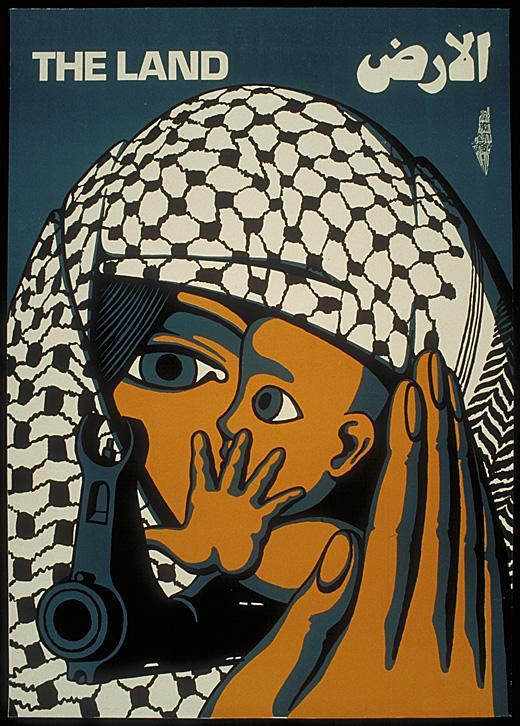
What is it like being a woman at war?
We don’t have to look far to find those who can tell us: It is to have one’s humanity stripped and become nothing but a prop for media. From the start of the aggressions on Gaza on the 7th of October, women have served primarily as cannon fodder for Western media’s demonization of Palestinians, with Western nations being no stranger to using the suffering of a people to villainize them. Several claims were presented in order to further this narrative of which are the use of alleged and debunked accusations of violence against settler women as evidence of Palestinian savagery, the portrayal of Palestinian regard towards women as primal and misogynistic, and the purposeful withholding of sanitary and medical supplies from Palestinian women to apply pressures for concession.
Some of the very first images to surface onto the internet from October 7th, which were then adopted by Western Media outlets, were those of bloodied women that were claimed to be settlers that had been raped and beaten by Hamas fighters. Though no definitive evidence or results came to light to support these claims, this narrative was pushed by news outlets such as CNN stating, “women and girls caught in the rampage were brutalized sexually, as well as physically tortured …”, as well as on social media, with posts such as those of Amy Schumer with one including a cartoon ‘protest’ where the signs read “proud of our rapist martyrs” and “gazans rape jewish girls in self-defense”.
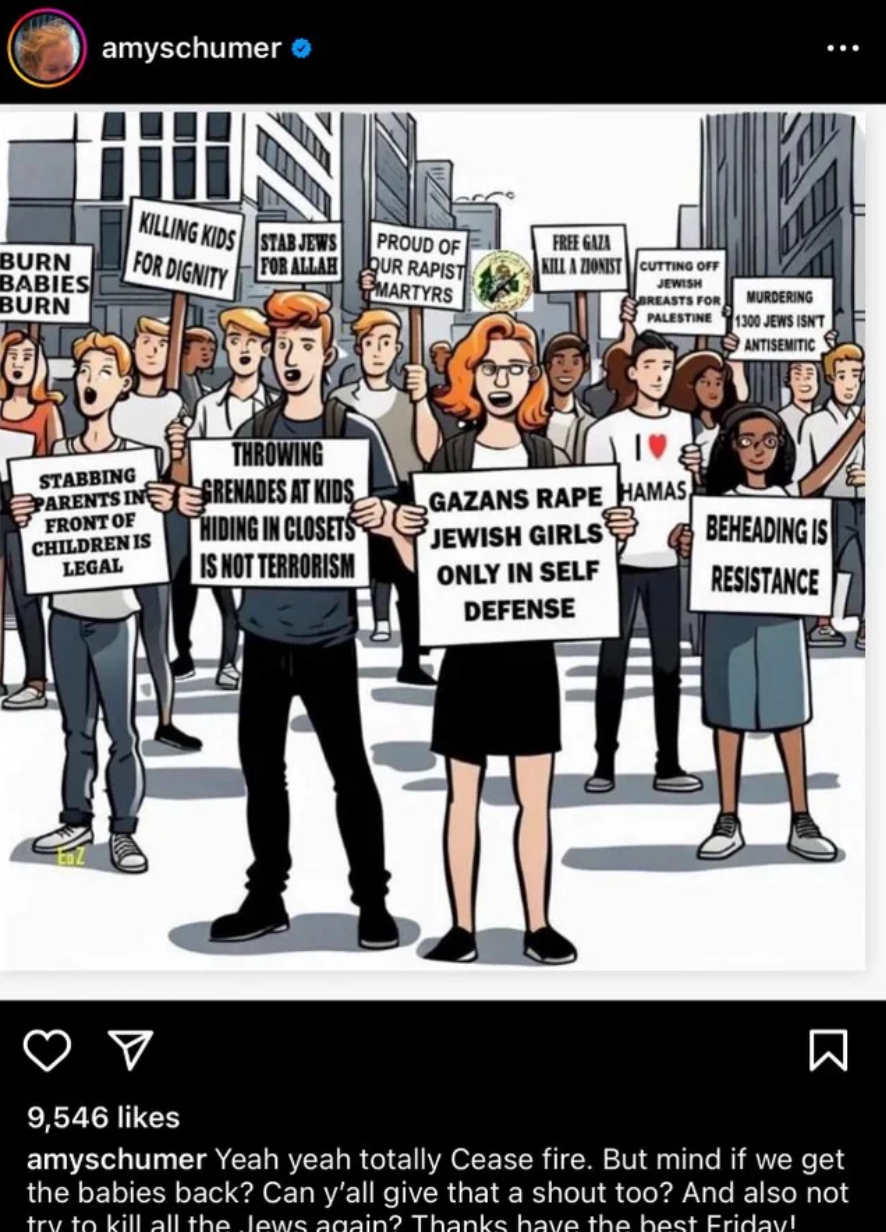
Amy Schumer [@amyschumer]. A now deleted ‘satirical’ comic about Pro-Palestine protesters. Instagram, 23 October, 2023.
These claims were widely and readily accepted by Western audiences with little to no questioning, alongside the ease with which grave and serious accusations such as these were made, setting the status quo through which Arab men, and those who are Palestinian specifically, are viewed as barbaric and sexually depraved. This western presupposition is the result of the generalization that the East is barbaric, creating a cultural hegemony, an idea widely discussed in Edward Said’s 1978 book, ‘Orientalism’. Its role is further evidenced by the conflation of Arabs with Islam and the religion’s own conflation with extremism and terrorism by the West, which are the cornerstone of their media, and October 7 only served as evidence to them, obstructing any attempt at any type of probing into the circumstances that have built up to the attack (say 75 years of violent occupation?) nor into the validity of the accusations. These settler women are to be perceived and commemorated as dead, violated bodies, given coverage under the label of ‘rape victim’, only to be used as tools for furthering the chosen narrative that the media wants to declare as the truth. The IDF (Israeli Defense Forces) is a main facilitator of using its women as a propaganda tool via its many twitter posts, distinctly and deliberately painting these women as attractive victims (with an emphasis on European beauty standards), placing them at the intersection of so-called victimhood and sexuality. Thus, these women were only given attention and care by the general public as symbols of male Palestinian violence, their role as settlers were pushed aside.
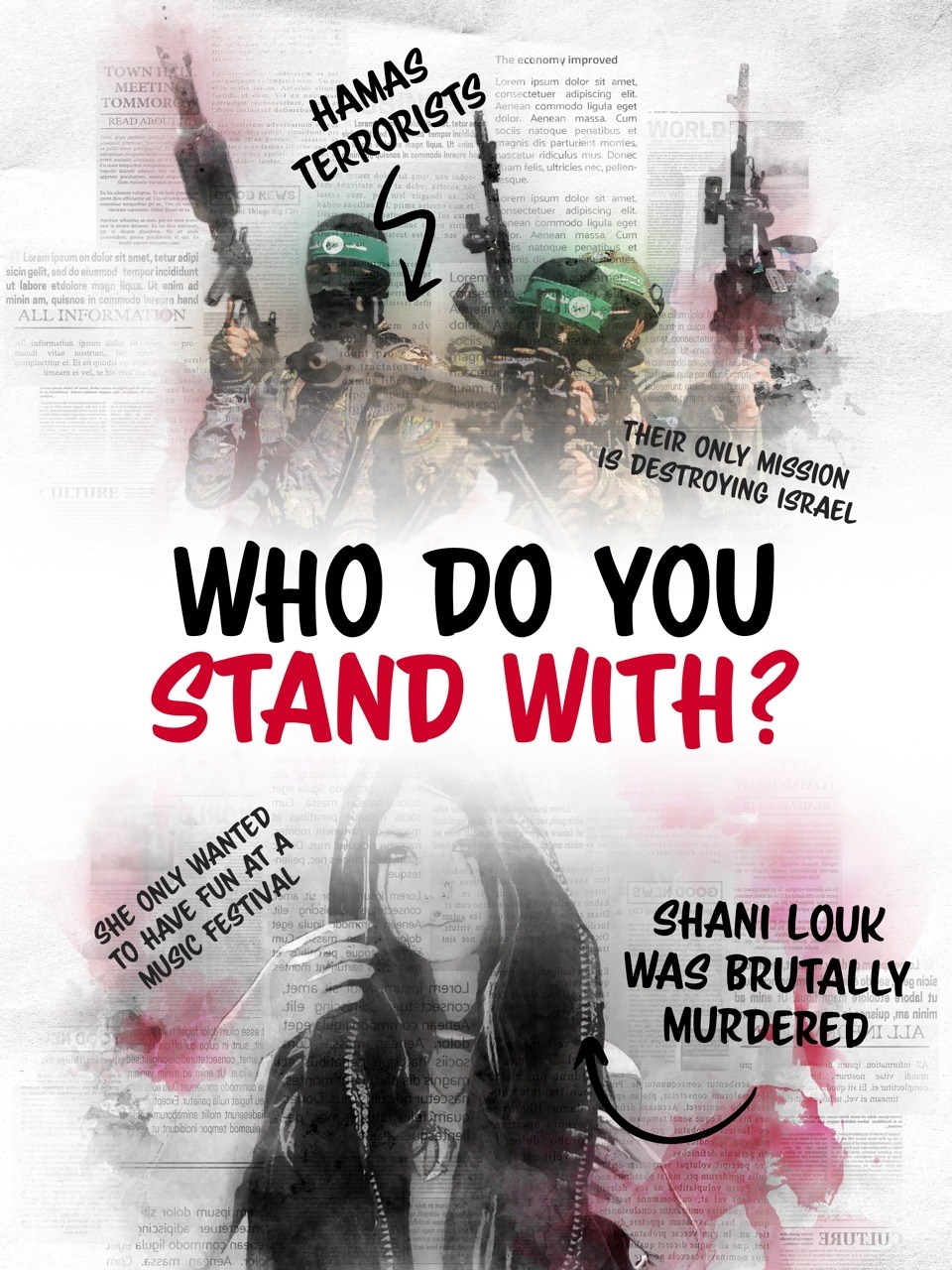
Poster portraying Hamas as a terrorist group and the sexualization of one of the women who was reportedly killed on the 7th of October. Twitter, 23 November, 2023.
It is important to note that the sexualization and fetishization of settler women does not only occur after their death, but also quite rampant in the IDF’s self-portrayal. The utilization of beauty standards typical of the ‘civilized West’ serves to adopt a black-and-white categorization among the women serving in the IDF and Palestinian women, as seen in the pictures and videos released by the IDF and its subordinates (an example is found below). Settler women are portrayed usually as white and, more times than not, blonde and blue-eyed, with an innocence that is not extended to Palestinian women, whose portrayal is filled with caricature-like large noses, a unibrow, big moles, and a gapped smile, all of which are deemed unattractive in the West, which in turn means unworthy of life. This dichotomy between the innocence of settler women and uncivilized Palestinian women is translated to Western media and the way it reports on these two groups. Palestinians are automatically stripped of their innocence, regardless of age, and the language used further alienates any notion of sympathy. Referring to a three or four year old preschooler as a ‘young lady’, as done by SkyNews anchor, while reporting on her death by occupant bullets is a blatant exemplification of the deliberate severance of blamelessness and innocence from Palestinians, including children. Hence, the fetishization of European looking women in the IDF is not only used to garner Western support but also to villainize Palestinian women, solely based on features.
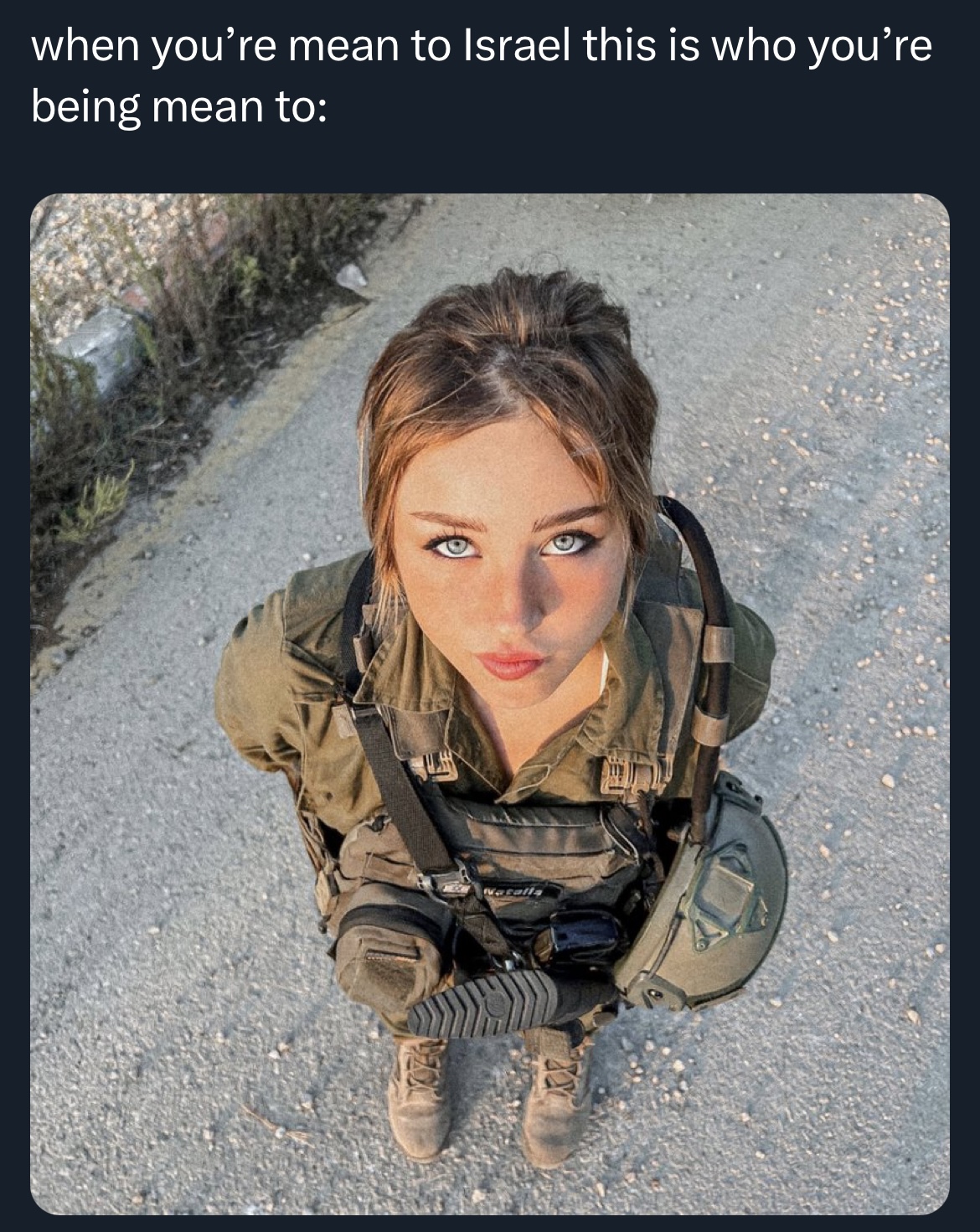
Twitter/X post portraying a Russian IDF soldier from Twitter, 05 November, 2023.
Palestinian men are also painted as the oppressors of not only settler women but also Palestinian women. Palestinian women are consistently portrayed as victims, little consideration is ever given to their roles as active members in their own communities as partners, leaders, or quintessential members of the resistance (a role Palestinian women have taken on since the British mandate). They are reduced to thoughtless and faceless bodies that are reserved for only one job: reproduction. This builds on the rampant Western belief that women in the MENA region lack agency and function only under the control and mercy of the patriarch. Women of the region are a caricature of Western societies; regarded as oppressed and helpless. And such exaggerated and horrid images serve one purpose: to portray the baseless narrative that the Zionist regime necessary to garner support under the pretense of fighting for human rights all while they violate the rights of these women, always portraying them as victims of the big bad Palestinian man. But, Palestinian victimization is primarily carried out by Zionists to the violation of several human rights, including the right to live free of violence and discrimination (reported sexual harassment at checkpoints and purposeful impedement of movement, as discussed further in the latter part of this article) , and to enjoy the highest attainable standard of physical and mental health, and are thus, using Palestinian women’s very existence as a weapon against them. Despite these transgressions, it is still instilled in Western thought that those who violate Palestinian women’s rights are Palestinian men. When we talk about Palestinian men, it is not just the young and the faceless, it refers to all: The educated and uneducated, the old and the young, the working man and the politician, etc… It is best exemplified in what has become a viral video of TalkTV’s Julia Hartley-Brewer angrily shouting, “Maybe you are not used to women talking, I don’t know!” at — after she berates him for discussing placing the events of October 7th in historical context by saying, “Please don’t say that again, we don’t have time for it. You’ve made that time five times already.” These claims serve a second purpose: To discredit and impede the attempts made by Palestinians on an individual and organizational level, especially women, at engagement with the international community. For if she is under the threat of the terrorist man, how can she be trusted to tell the truth?
The occupation’s deliberate manufacturing of the decline of Palestinian women’s health in Gaza is an attempt to create pressure to force Hamas to yield. Several strategies are being currently implemented, the first of which is the purposeful stripping and destruction of Gazan hospitals from necessary medical supplies. Amongst said medical supplies are female hygiene and menstrual products, such as pads, tampons, and the likes, forcing the besieged women to endure menstruation and its accompanying pains under atrocious circumstances. The girls and women have had to either resort to making out pads from the little supplies they have at hand or to free flow on their periods. When it comes to make-shift pads, the women of Gaza have had to turn to cutting up tents to collect canvas strips to use instead of the appropriate sanitary products; other materials used instead of the suitable products are old clothes. Make-shift pads and free flowing-blood compromises the hygienic integrity of both the urinary and the reproductive tract which can lead to serious infections. If not treated, which is very likely due to the scarce resources at hand, these infections can rapidly turn into septic shock (causes elevated heart rate, low blood pressure and fever) which is life-threatening. To add onto that, anesthesia is also being sieged, forcing physicians to perform surgeries under hellish conditions without any sort of pain relief for the injured survivors. These surgeries include C-sections, where women are having up to seven layers, from the epidermis and the uterine wall, to be subjected to surgery with no anesthetics. The horror does not stop there: the deprivation of Gaza from the fuel needed to maintain power forces patients and victims of the war and their families to seek shelter in the hospitals and to be treated in the dark. The lack of electricity means that much of the medical equipment is rendered useless, including baby-incubators. Thus, enduring the excruciating pain of a C-section may not be a Palestinian mother’s biggest concern, especially if the baby is premature (which is quite common with elevated levels of stress). With the absence of incubators, most premature babies have very low probabilities of surviving. In addition, the futility of medical equipment such as headlights, sterilizers, curettages, and electrosurgical units impedes and makes practically impossible the performance of necessary surgeries as in the case of life-saving hysterectomies induced by peri-partum hemorrhaging (heavy bleeding in the uterus that cannot be stopped). These restrictions are intended to cause indiscriminate anguish to all Palestinians, those in the midst of the genocide and those watching, a collective punishment for rising against the occupation’s brutality to be used as means of pressure.
However, the IDF and the Occupation’s strategies pertaining to the use of Palestinian women’s suffering as a way to assert their power over Palestinian territory is not something exclusive to the events that transpired as a result of the 7th of October, in fact the occupation has been utilizing Palestinian women’s suffering as means of control and degradation for the past 75 years. Usually these degradations occur most commonly at checkpoints, which are mainly used for ‘segregation’ (this is the term used by the IDF) mainly with the purpose of cutting Palestinian transit across different urban areas. The abuse takes several forms, ranging from blocking the passage of women in labor to sexual assault and harassment. Girls who appeared sexually mature were at risk of being viewed as sexually available, and while sometimes advances were explicit, other times the harassment is given the firm of a body check/search; recently, a video surfaced from the West bank on ‘Quds News Network’ of a body check being implemented on a hijabi girl that did not look to be over fifteen years of age. These behaviors are used as a way to exert power and the extent to which it stretches. On the other hand, the humiliation that Palestinian women are subjected to in prison is of a different kind. Though exposed to sexual violence, detainees are subjected to different methods of torture and maltreatment such as exposure to extreme heat and extreme cold, sleep deprivation, beatings, slapping, tightening of and stepping on shackles, and deprivation of essential needs. Yet, these crimes are kept under wraps, which begs the question: Why are Palestinian women forced into silence?
These cases are difficult to bring to light due to individual and organizational forms of oppression. The victim is silenced by the fear of further assault or imprisonment and the Palestinian organizations and institutions that dare report and discuss these issues are forcibly shut down by the occupational authorities, under the pretense that these human rights and civil society organizations are ‘terrorist organizations’. The parallels between the silencing of Palestinian women concerning their assault and harassment at checkpoints and the silencing taking place during the ongoing aggressions are very noticeable as similar tactics are implemented. Palestinians and their supporters in the West are attacked by Zionists when hanging up flyers raising awareness about the ongoing massacres, genocide, and the 75 year occupation in Palestine and end up getting doxed, harassed, and threatened with unabated violence and rape. Several organizations, both non-governmental (such as Canary Mission) and institutional (such as George Washington University and the State University System of Florida) have taken measures to stifle Palestinian voices, also through doxing of students and the suspension of student organizations, all used as means of fear mongering.
In spite of all this, Palestinian women’s suffering has reached a wider audience during the current aggressions, including that of the West, but this time it is not used as a weapon against them. Instead, their suffering has become their armor, as they have taken a hold of the portrayal concerning it while telling their own stories. Examples of this are the journalists Plastia Alaqad and Bisan Owda, both of whom have reported on the suffering of Gazans and on their own, showing the world that the ones who have weaponized Palestinian suffering as an excuse to ‘liberate’ their own women from the barbarism of being Arab, are the very ones who have caused this suffering.
Edited by Malak Mansour